01
Professional upskilling
Short, focused courses for technical specialists and practitioners seeking proficiency in new methods, tools or platforms.
Individual development
Build specialist capabilities in AI, geospatial intelligence, data, automation and enterprise systems through role-aligned, project-based technical training.
We propose modular technical training for working professionals, corporate engineering teams, public-sector organizations, universities and research institutions. Programs begin with a review of roles, existing capabilities, technical environments and intended outcomes.
Learning can combine expert-led instruction, guided labs, relevant technical use cases and assessed project deliverables. Scope, participant level and delivery arrangements are confirmed for each engagement.
Select a training format based on team responsibilities, required depth, time constraints, technical infrastructure and business or institutional objectives.
Short, focused courses for technical specialists and practitioners seeking proficiency in new methods, tools or platforms.
Individual developmentCohort-based programs aligned with common workflows, departmental responsibilities and organizational technology priorities.
Team capabilityIntensive, prerequisite-based programs with guided implementation labs, milestone reviews and applied technical assignments.
Applied skillsStructured sessions on emerging technology capabilities, limitations, adoption considerations, governance and investment decisions.
LeadershipScenario-based training using representative datasets, defined acceptance criteria, peer review and demonstrable deliverables.
Practical deliveryCo-designed learning programs for universities, research centers, government bodies and professional development units.
CollaborationChoose foundational, intermediate or advanced modules according to role requirements. Advanced workshops require appropriate programming, mathematical, engineering or platform prerequisites.
Design and evaluate ML, generative AI, retrieval-augmented applications and agent workflows, including security and deployment considerations.
Apply GIS, remote sensing, satellite data and spatial machine learning to planning, monitoring and geospatial decision support.
Develop capabilities in UAV data collection planning, photogrammetry, point-cloud processing, 3D modelling and digital twin workflows.
Strengthen SQL, Python, statistics, data governance, reporting, dashboards and predictive analytics for operational decisions.
Build skills in cloud architecture, secure integration, network services, DevOps, automation and system reliability.
Work with climate datasets, environmental monitoring, spatial exposure analysis, risk communication and resilience planning.
A structured engagement process links technical learning to defined organizational or institutional requirements.
Review job roles, baseline skills, performance needs, systems, available datasets and delivery constraints.
Specify proficiency targets, learning sequence, lab infrastructure, governance conditions and acceptance criteria.
Facilitate instruction, technical workshops, exercises and project reviews in the agreed delivery format.
Evaluate artifacts against defined criteria and identify follow-on learning or implementation needs.
Each engagement should establish target competencies and the evidence participants will produce to demonstrate practical understanding and technical execution.
Describe system capabilities, constraints, architecture choices and appropriate organizational applications.
Configure tools, process datasets and implement a documented solution in an approved training environment.
Test outputs against acceptance criteria, record limitations and present recommendations to technical or management stakeholders.
Account for information security, privacy, model or data quality, regulatory constraints and physical safety where relevant.
Yes. Proposed programs can be adapted to selected roles, tools, realistic sample datasets and technical scenarios, subject to a clear written scope and available resources.
Programs can be scoped for foundation, intermediate and advanced participants. Advanced labs require a prerequisite review and may include preparatory modules.
Private cohort training can be discussed, including targeted labs, project work and review sessions. Group size and delivery arrangements are agreed during scoping.
Available formats depend on location, instructor and facility availability, technical infrastructure, data access, equipment and safety requirements.
Yes, you will receive a digital certificate and a physical hardcopy upon completion. You can add the digital certificate directly to your LinkedIn profile or share it across other online platforms. We will also mail a printed hardcopy certificate to your address. Please note this program does not carry formal academic credit or external accreditation.
Assessment may include practical labs, implementation artifacts, demonstrations and criteria-based technical reviews. Evidence requirements and scoring are defined for each engagement.
Tell us your organization type, target roles, technical priorities, preferred delivery mode and team size. We can use these details to develop a scoped training proposal.
Swipe on mobile or use the arrows and dashes. Select a program to register on the Training Registration page.
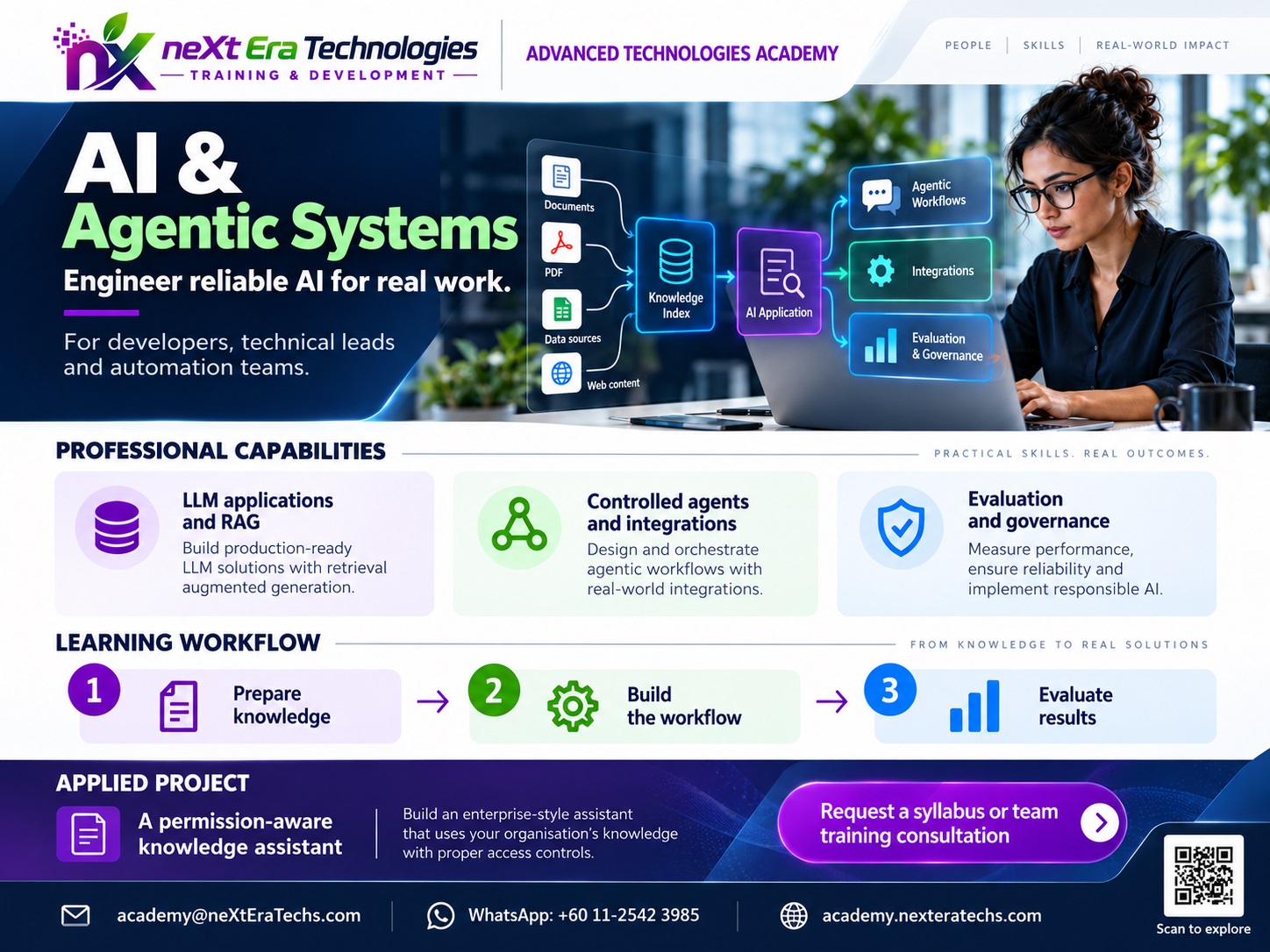 AI & Agentic Systems
LLM applications, retrieval-augmented generation, AI agents, workflow integration and evaluation.
Register for This Training ↗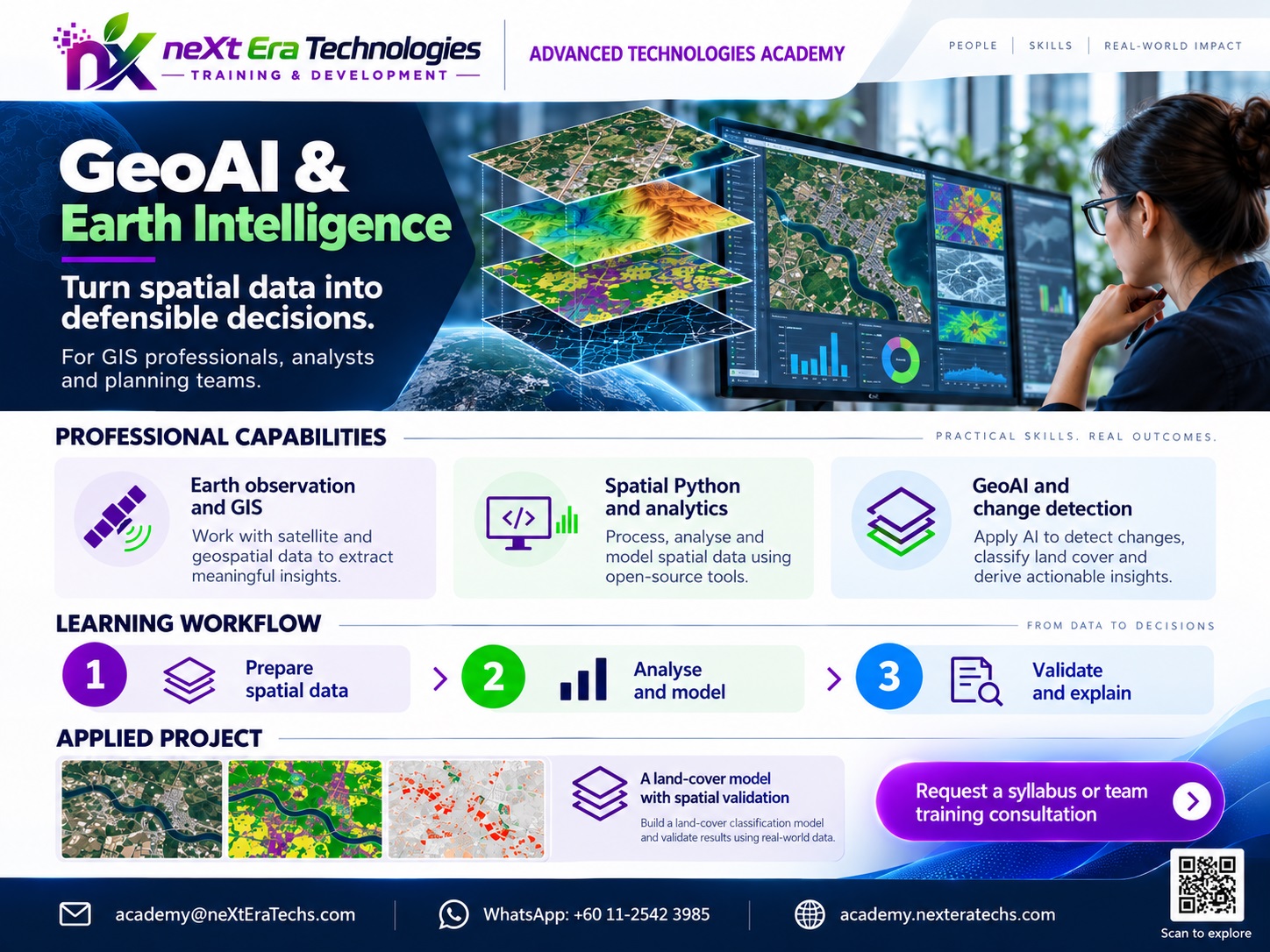 GeoAI & Earth Intelligence
GIS, satellite imagery, remote sensing, spatial data science and geospatial machine learning.
Register for This Training ↗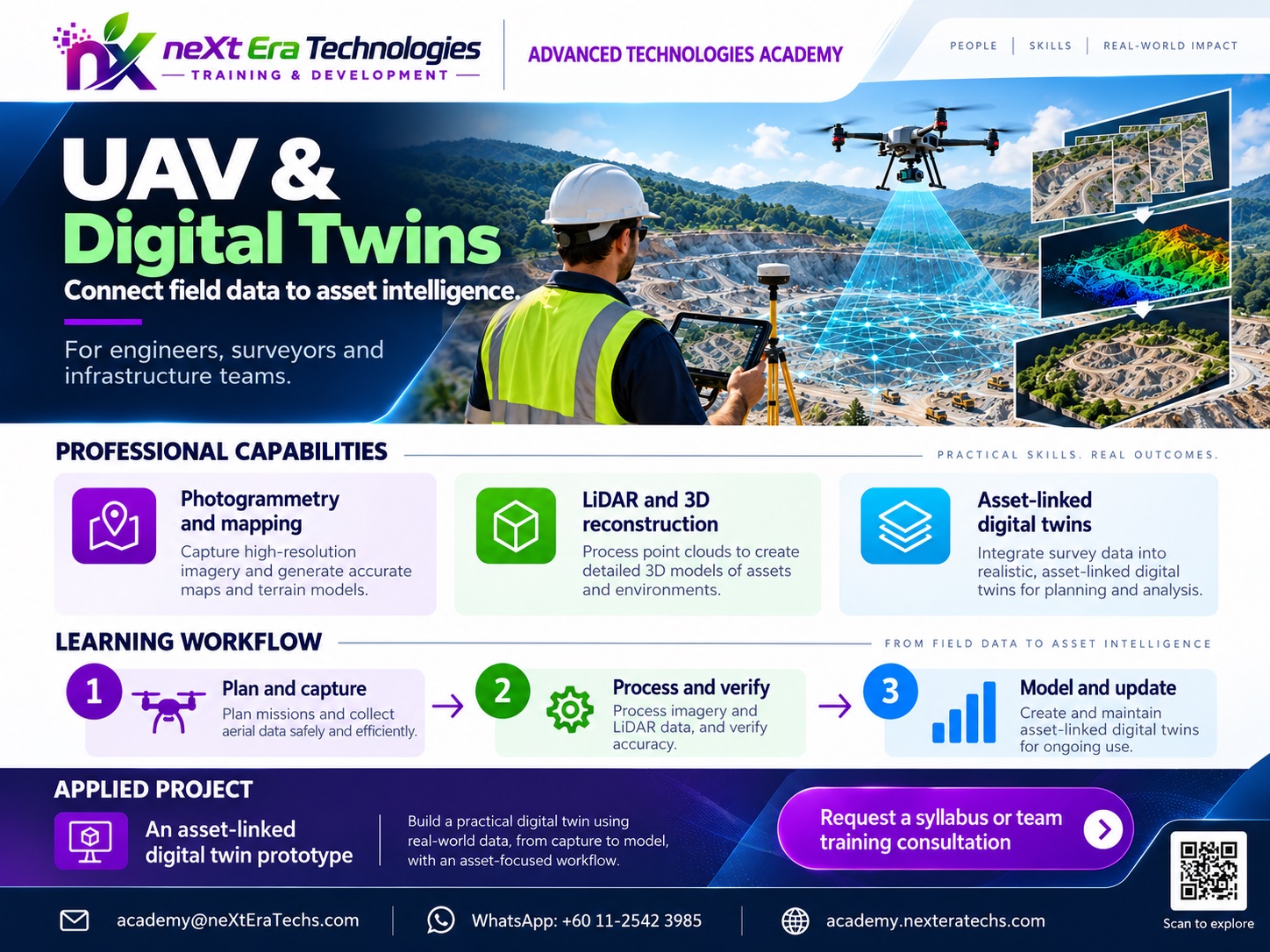 UAV & Digital Twins
Drone mapping, photogrammetry, LiDAR, 3D reconstruction and digital twin workflows.
Register for This Training ↗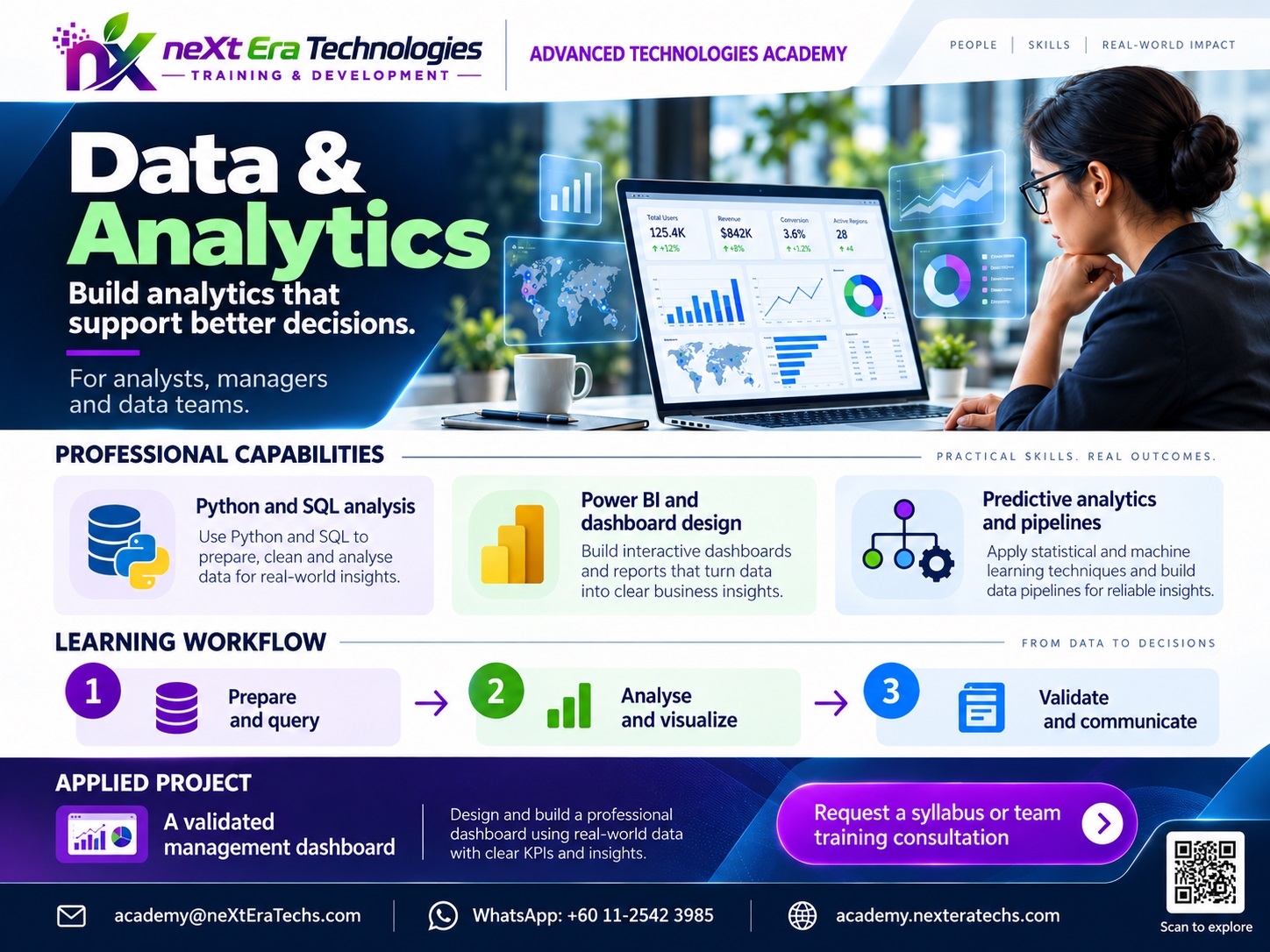 Data & Analytics
Data preparation, analysis, visualization and practical data-driven decision support.
Register for This Training ↗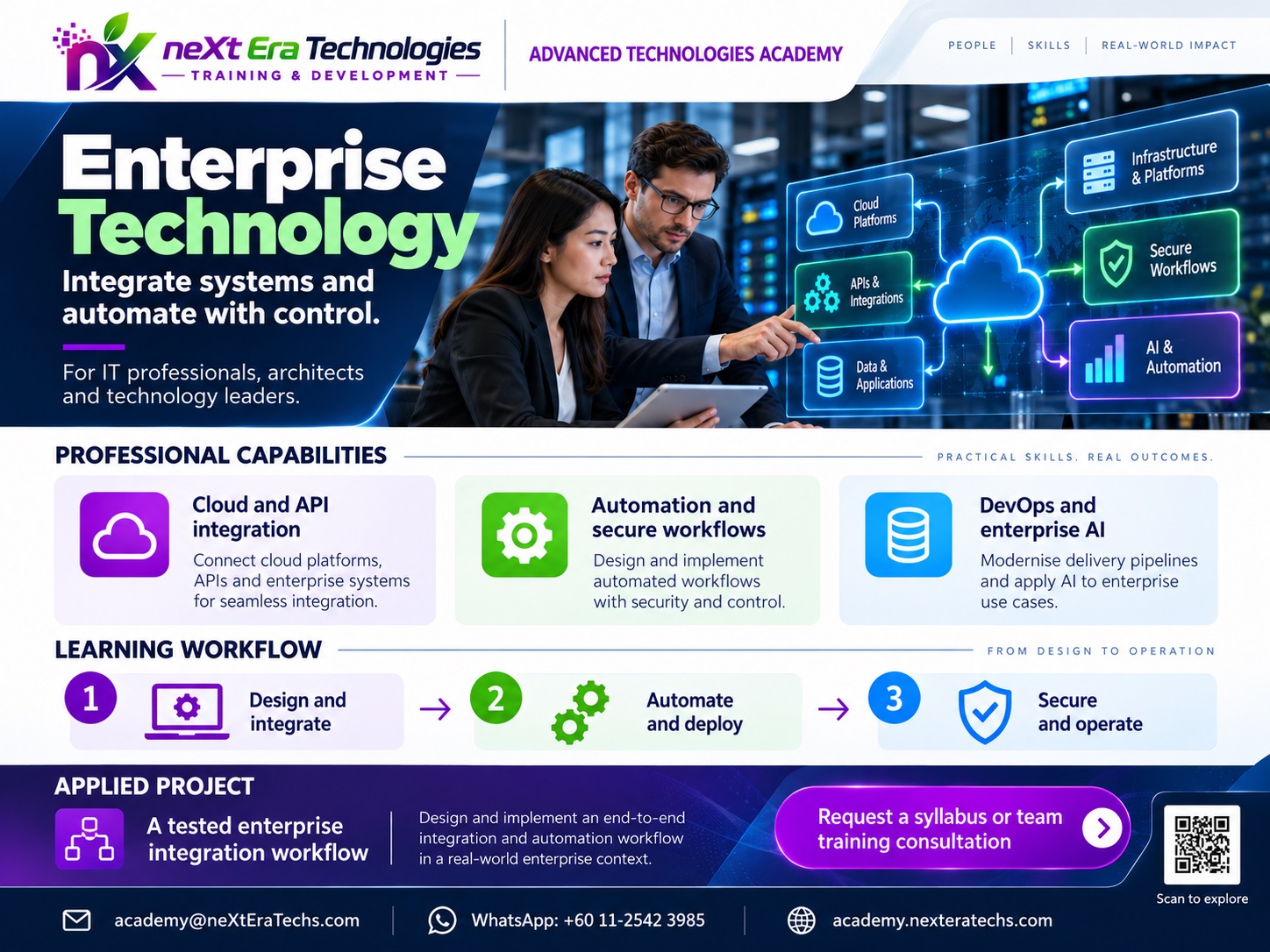 Enterprise Technology
Applied enterprise technology, integration and technical workflows.
Register for This Training ↗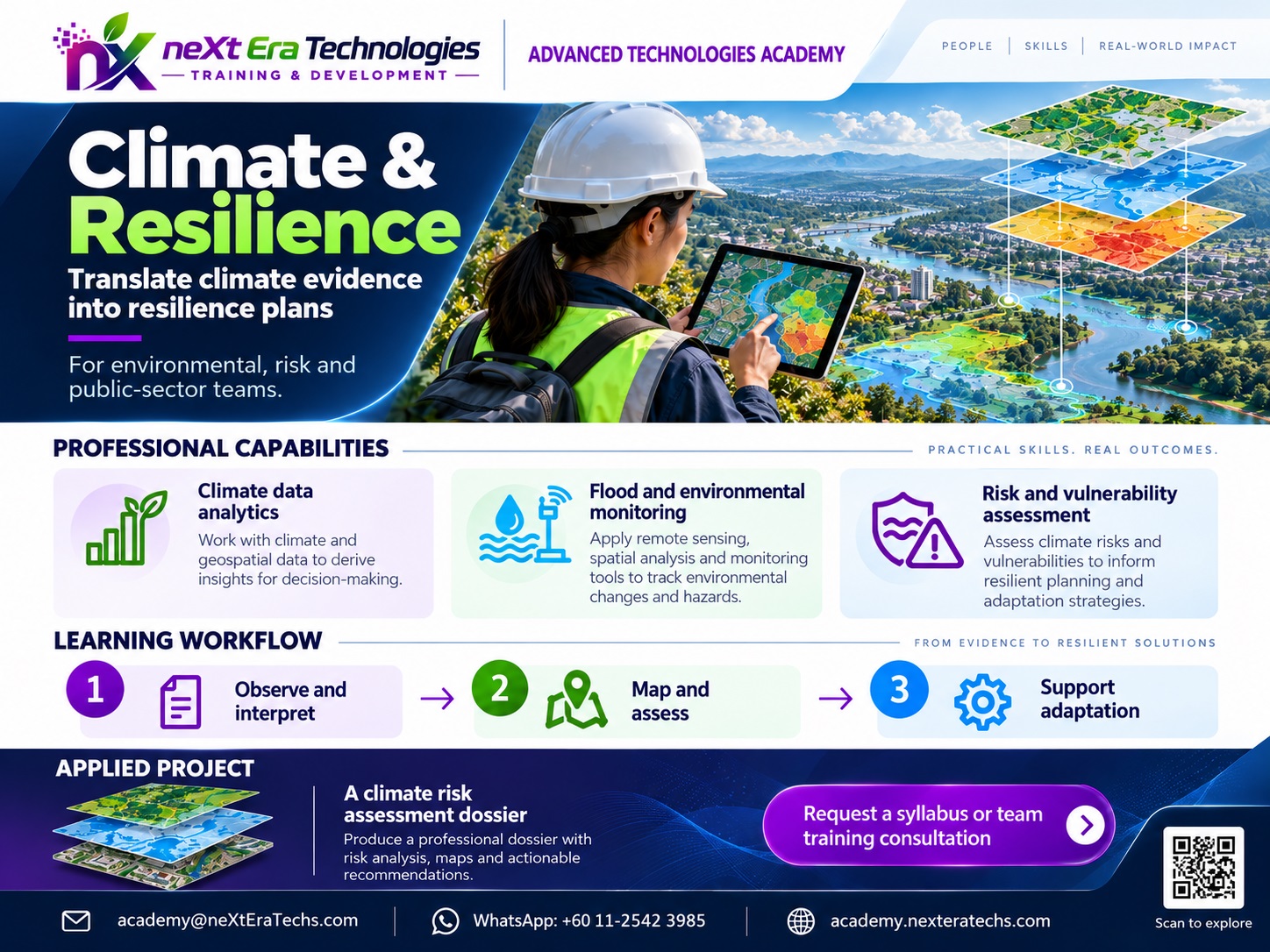 Climate & Resilience
Climate-related spatial analysis, environmental monitoring and risk mapping.
Register for This Training ↗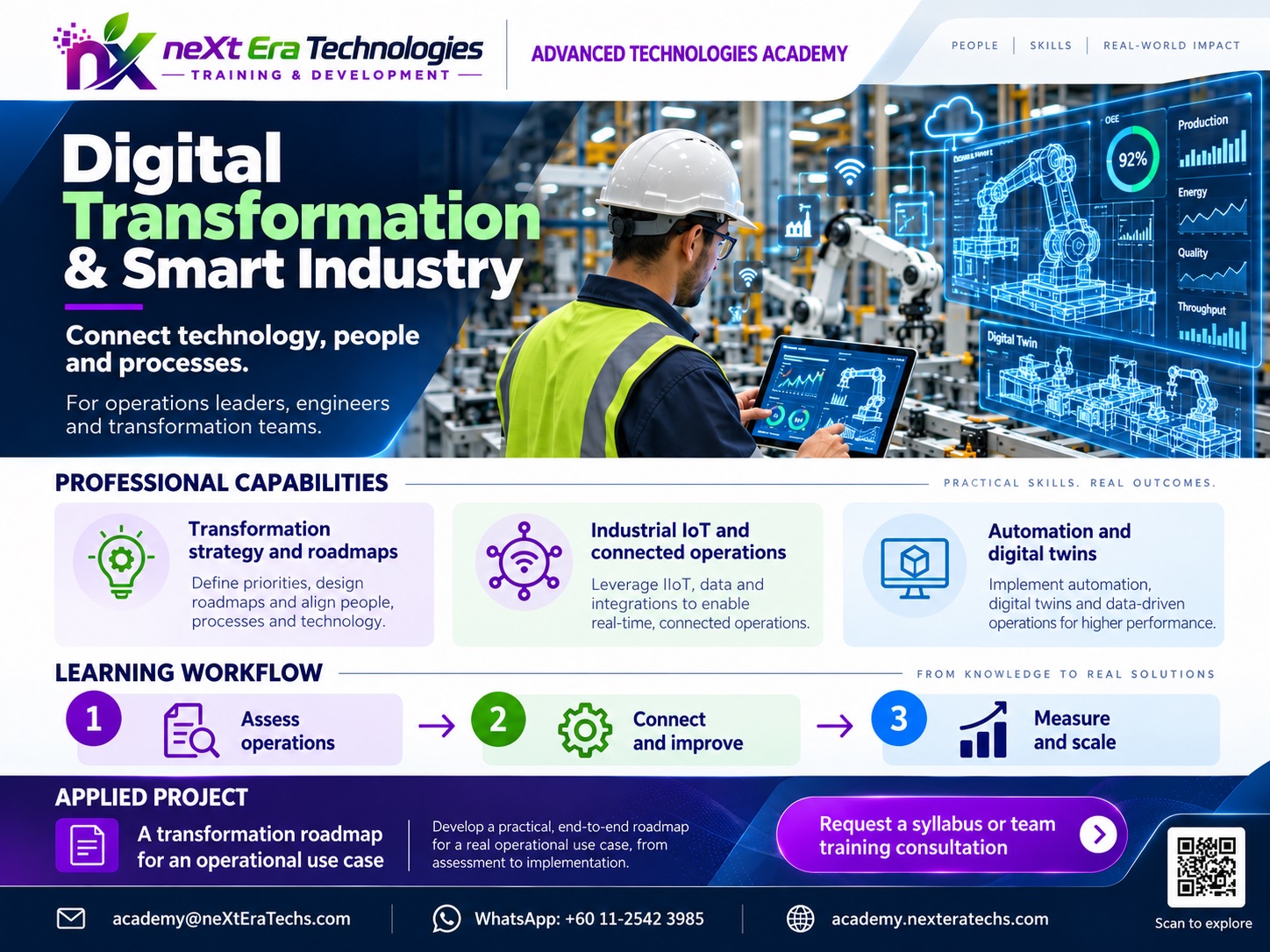 Digital Transformation & Smart Industry
Digital strategy, business process modernization, automation, cloud adoption and organizational change.
Register for This Training ↗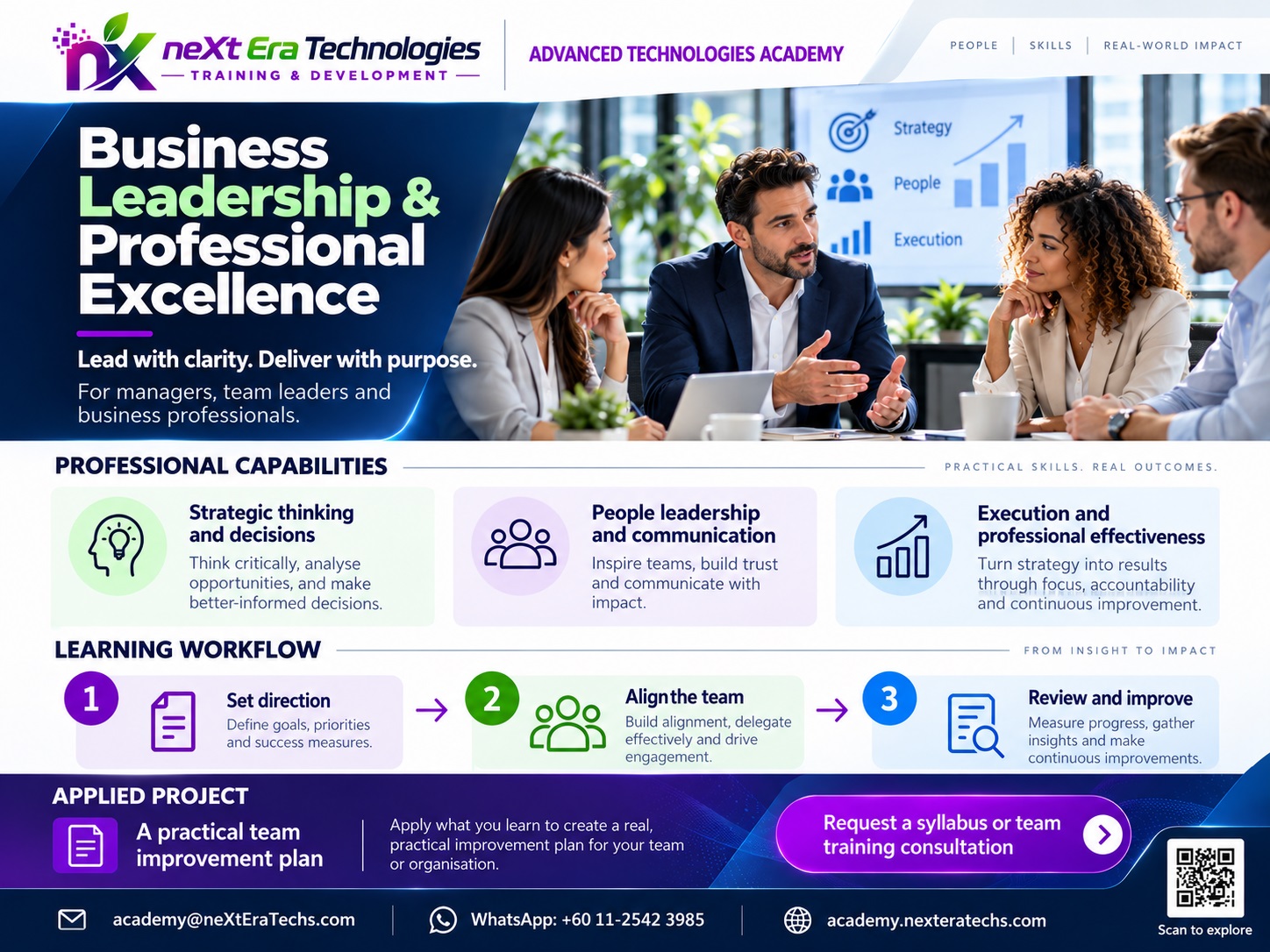 Business Leadership & Professional Excellence
Operational excellence, process improvement, quality management, performance measurement and leadership practices.
Register for This Training ↗